Fashion historians, please educate us.
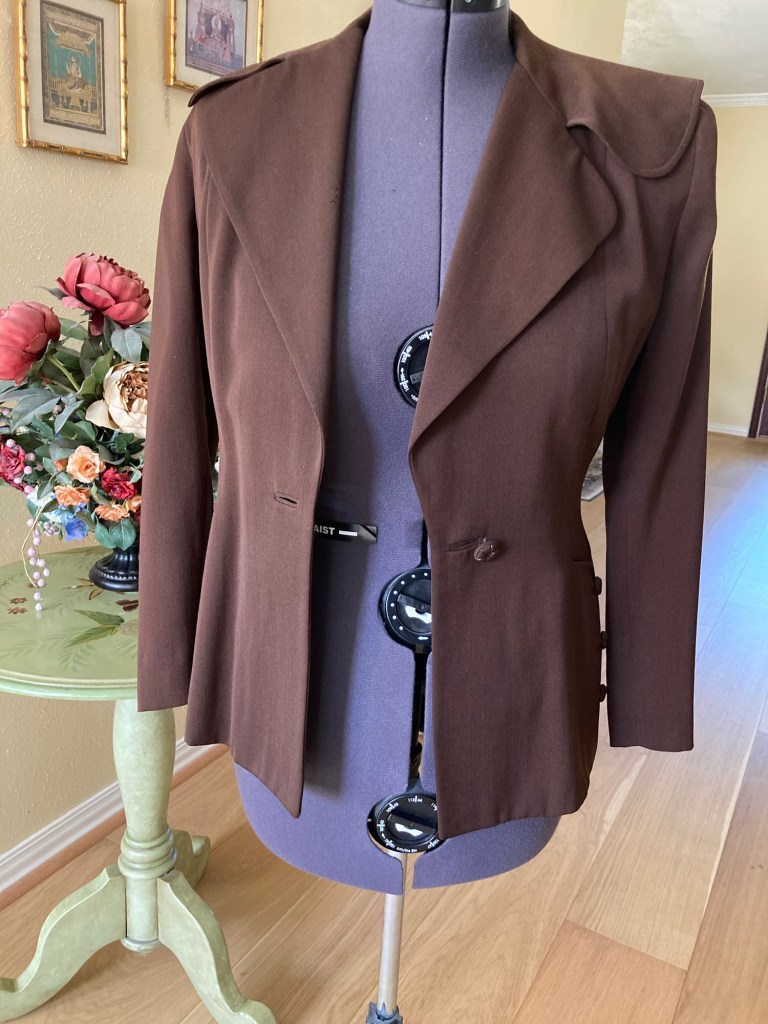
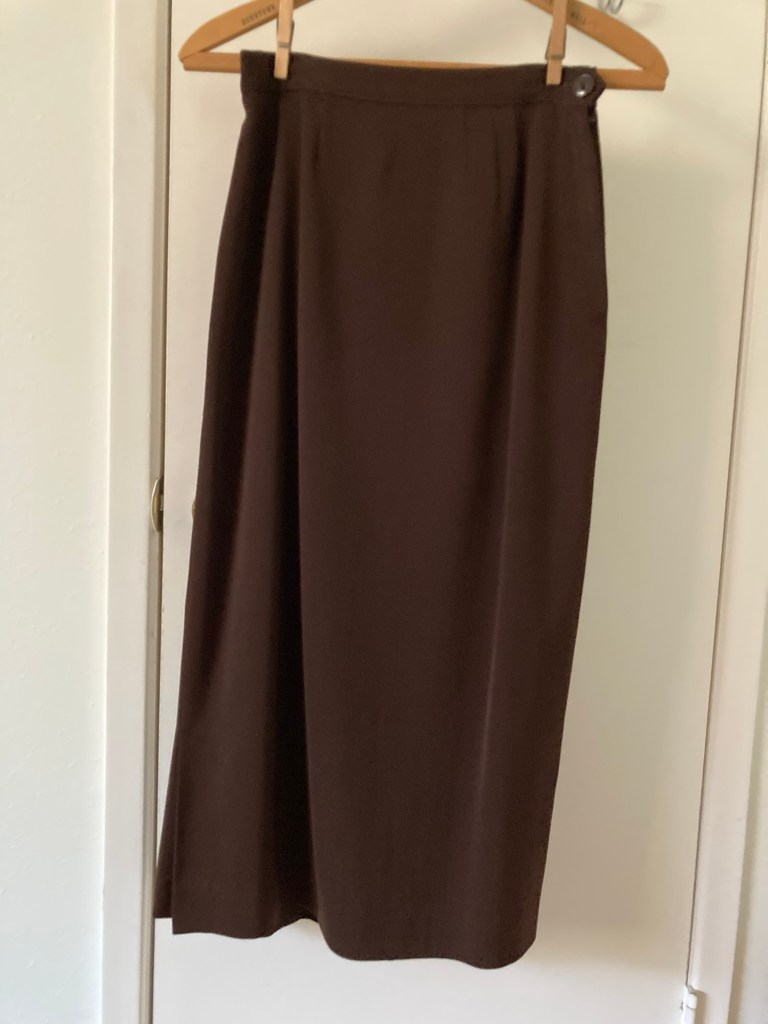
The archival area of my closet is deeper than I formerly let on. Back in the 90s I purchased this chocolate brown skirt suit from an antique store for $25 — a pittance in my estimation, considering it’s age, fabric, quality of construction and God knows what else collectors look for. The store owner said it was from 1940, and I wanted to own it just to “collect”.
I knew I couldn’t wear it since it is a very small size — it’s long and narrow which tells me it was meant for a very skinny, very tall woman — maybe it was a model garment?
Fabric, design details, construction details and labels:
Fabric: wool gabardine — it’s easy to identify as wool because one of the labels says so. Gabardine, because I know my gabs. The claret lining is pr-r-r-o ably rayon crepe, not silk as I originally thought, because wouldn’t silk fabric have had deterioration symptoms 86 years later? It has just been hanging in my closet since I bought it 30 years ago and before that in the antique store, and before that —- somewhere else. I wish I knew the journey of this suit.
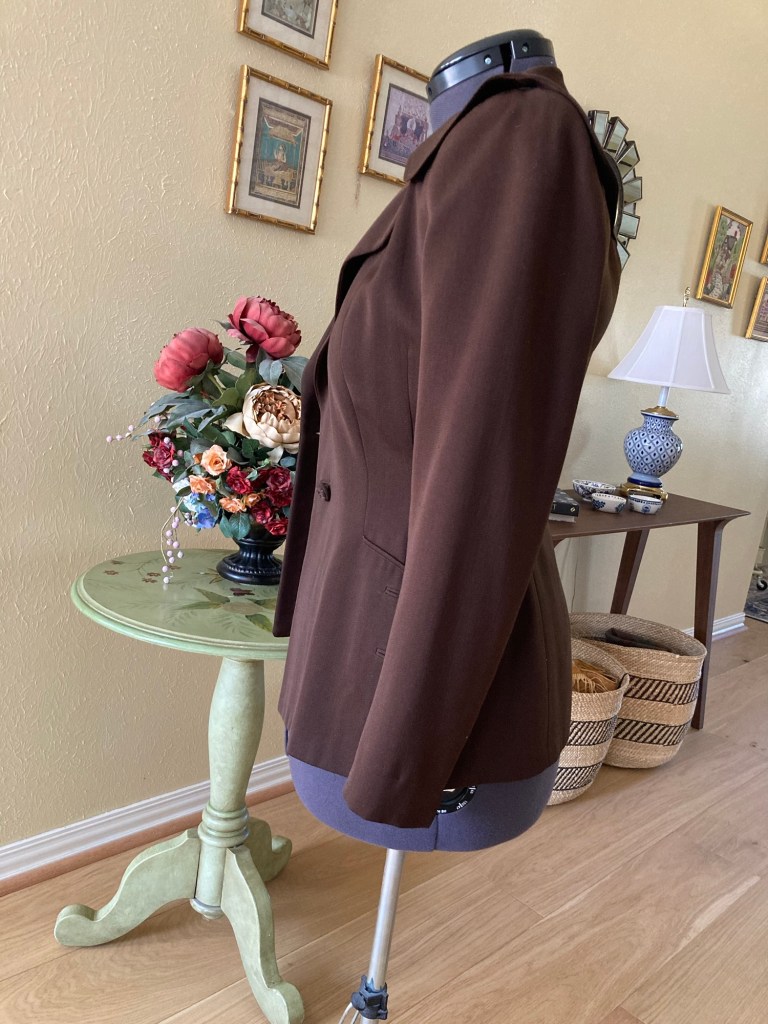
Design — there is so much to look at! To shape the suit, the jacket has princess lines and darts on the back and front — so many opportunities for shape and fit.
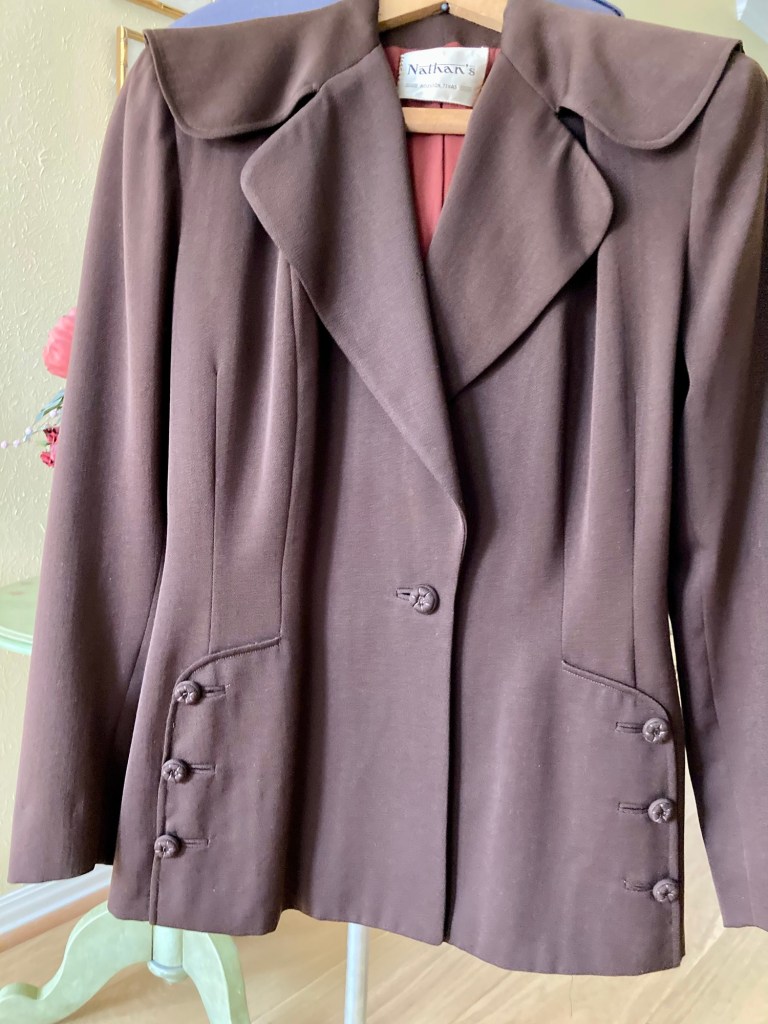
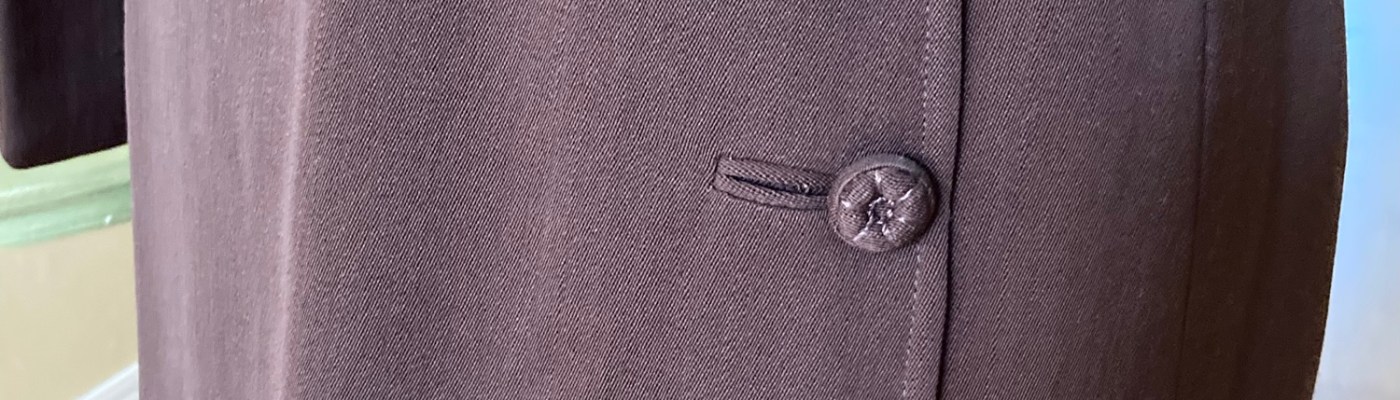
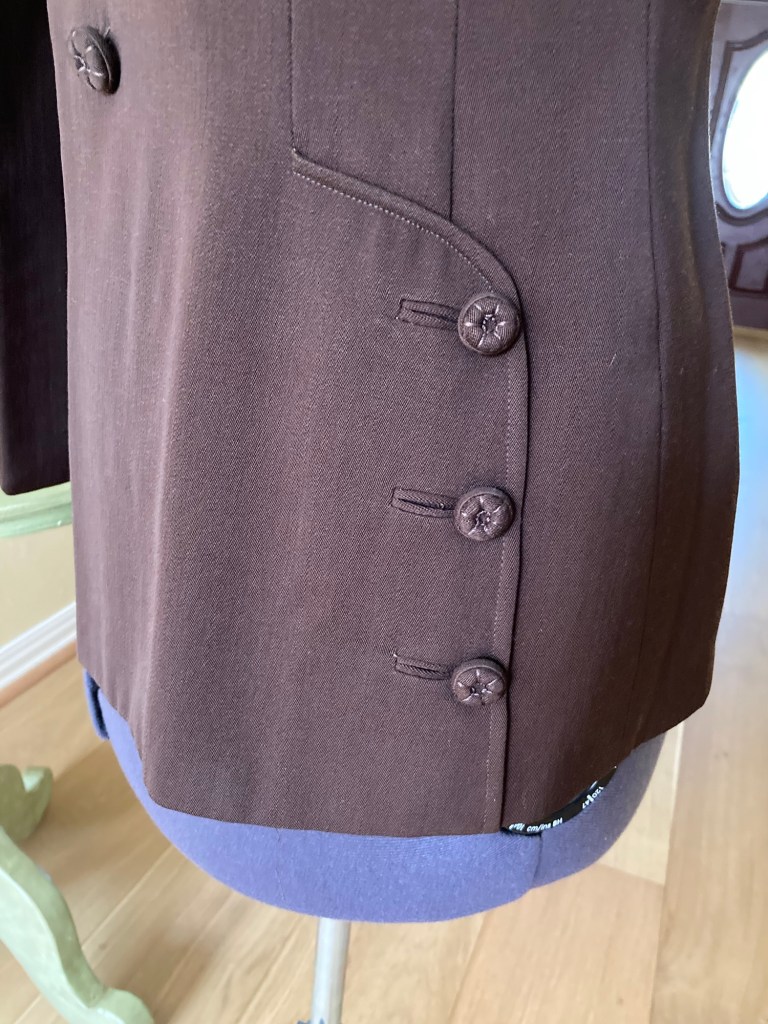
The jacket has a one-button closure with a bound buttonhole and unique custom covered buttons. We’ll have to visit these buttons later, and maybe try to duplicate them!!
There are no pockets — welt or patch—- which seems odd for a tailored jacket; the buttoned detail on the sides gives the “effect” of a pocket but there isn’t one. Is this an indication of the wartime fabric conservation?
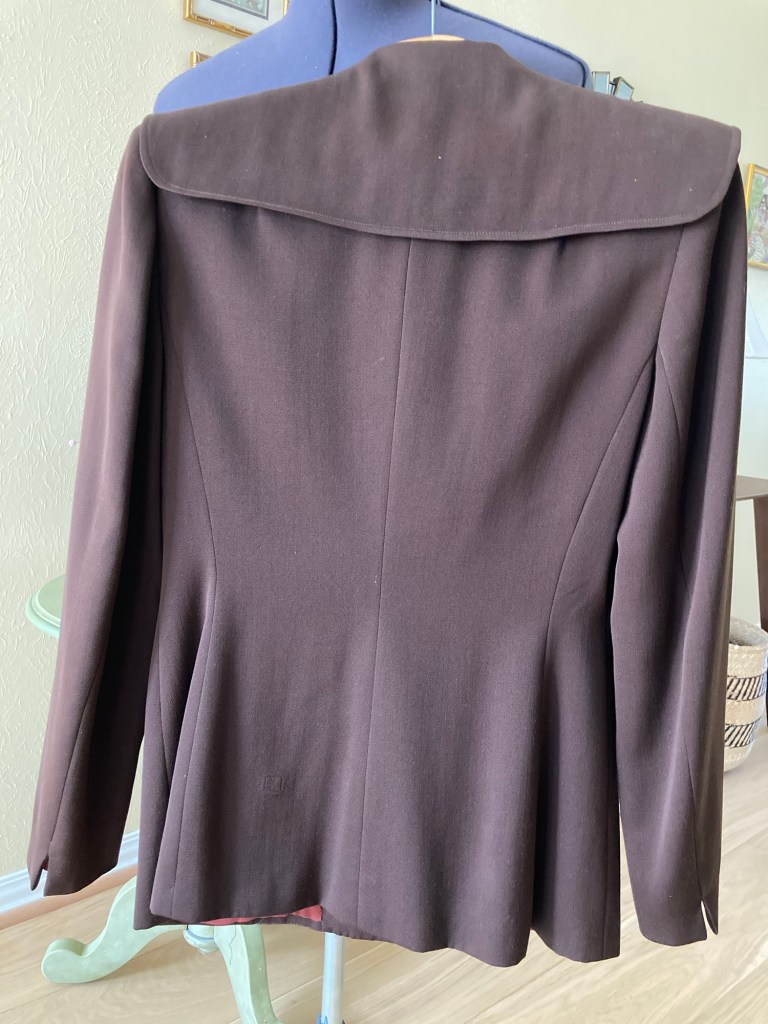
The collar becomes a square in the back to resemble a sailor collar; I think it helps to age the jacket. Need your help now, fashion historians!
The jacket’s lining has a slack — expected in a well made garment; as well, same thing in the sleeve lining. Construction details here are only what I could gather without ripping out (I like the word “unseaming”) the lining of the jacket.
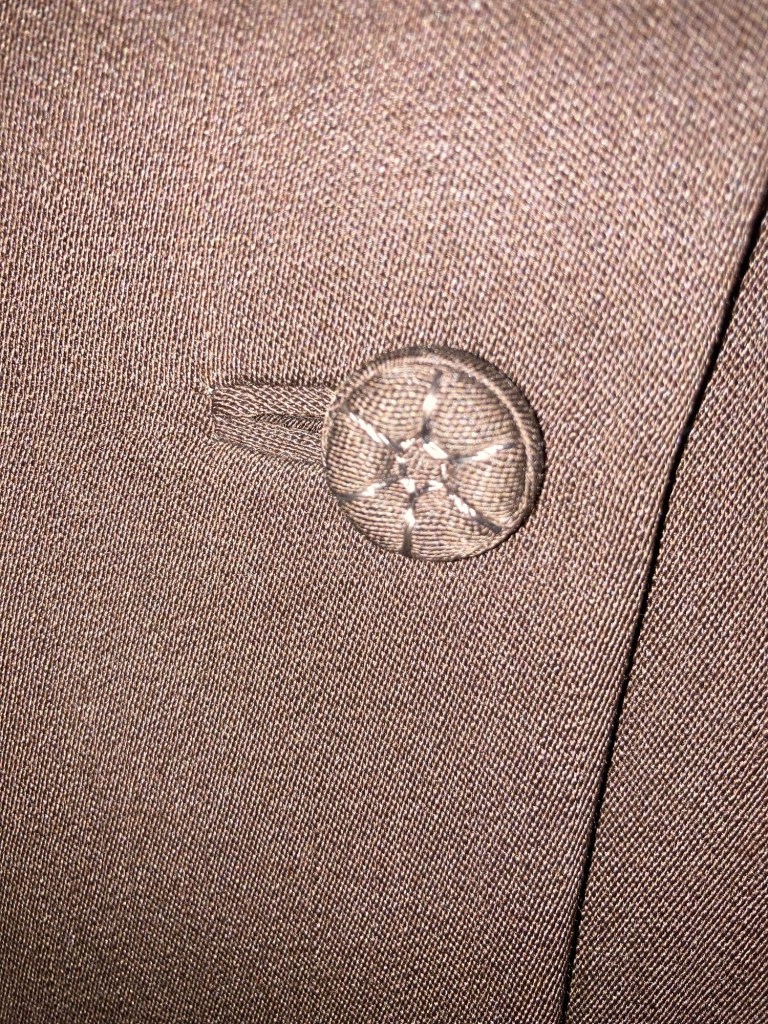
The buttonholes are all bound and expertly done so — yeah, I checked the inside facing to check — neat as a pin. A puzzlement: there is a buttonhole on both fronts; I mean, why is there a buttonhole where the button is sewn on? Is it to allow the wearer to switch the front overlap by removing it and sewing the same button to the other side?
The sleeves are two-piece; and I noticed that typical to an expertly tailored, couture sleeve, they curve slightly to the front.
The skirt is unlined, a boon for curious busybodies like me to see the construction details.
The skirt has four little darts at the front waist and princess lines on the back, plus a side metal zipper and plastic button closure.
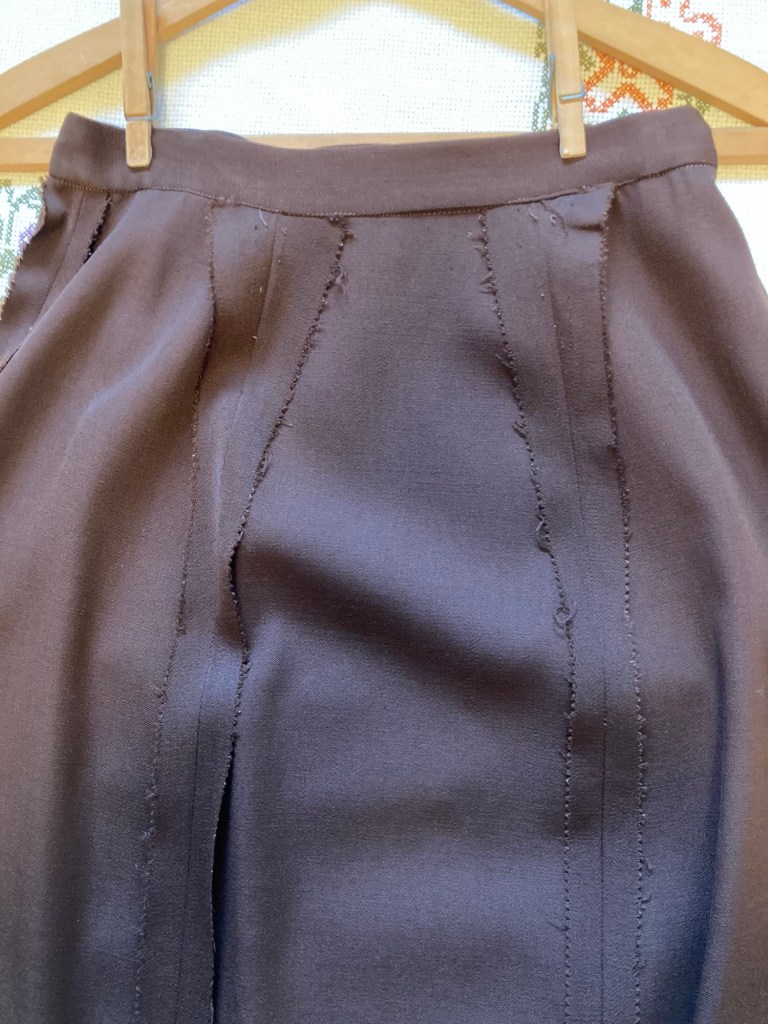
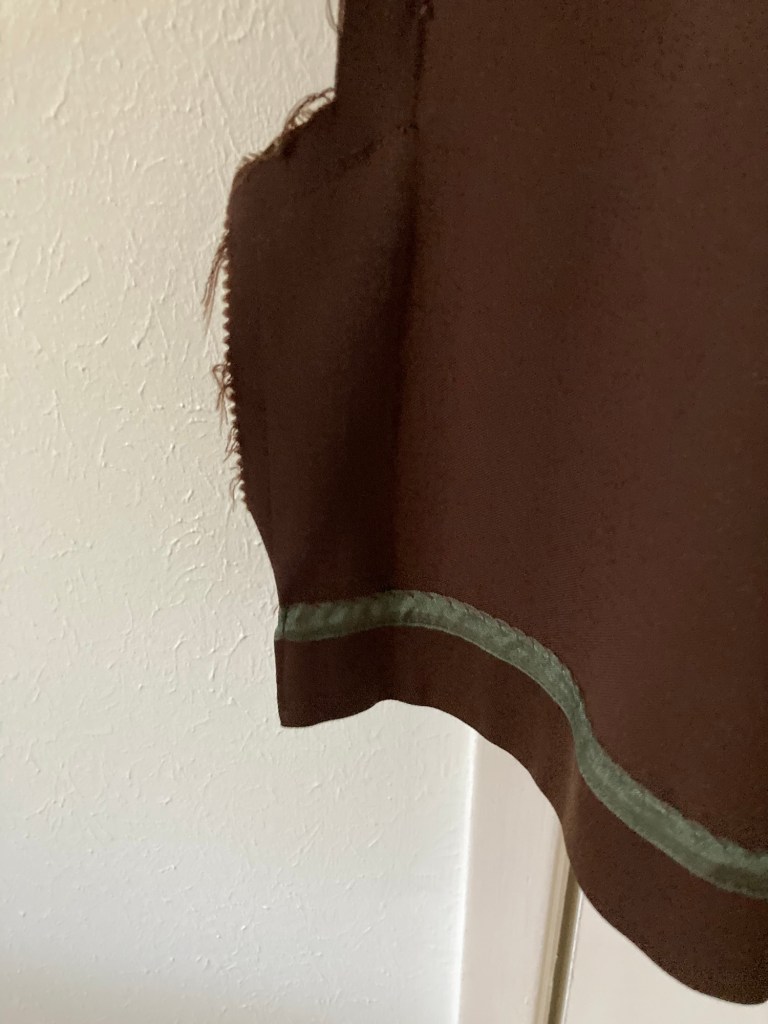
Notice that the princess lines on the skirt back have seams that are at least 1 inch, and grow wider as they go toward the waist! Is that for a possible alteration for the wearer as the body changes? Or to make the change for a customer who might purchase the suit? Personally, I think this suit has never been worn. The skirt hem is finished with a rayon hem tape — in green. Note that the tailor wielded his or her pinking shears for the seam edges. A narrow skirt like this must have a slit or vent somewhere for ease of movement, right? Found it! It’s actually a pleated vent in the side seam on just one side of the hem. This is what it looks like from the wrong side.
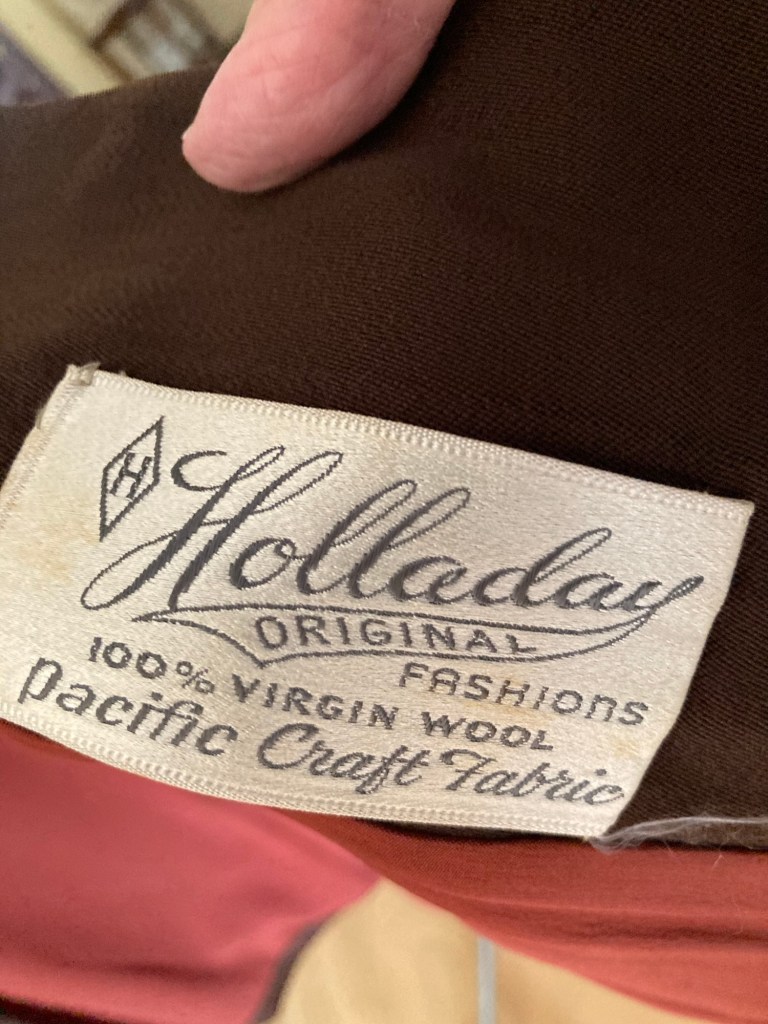
Here are some labels inside that are just asking for some research.
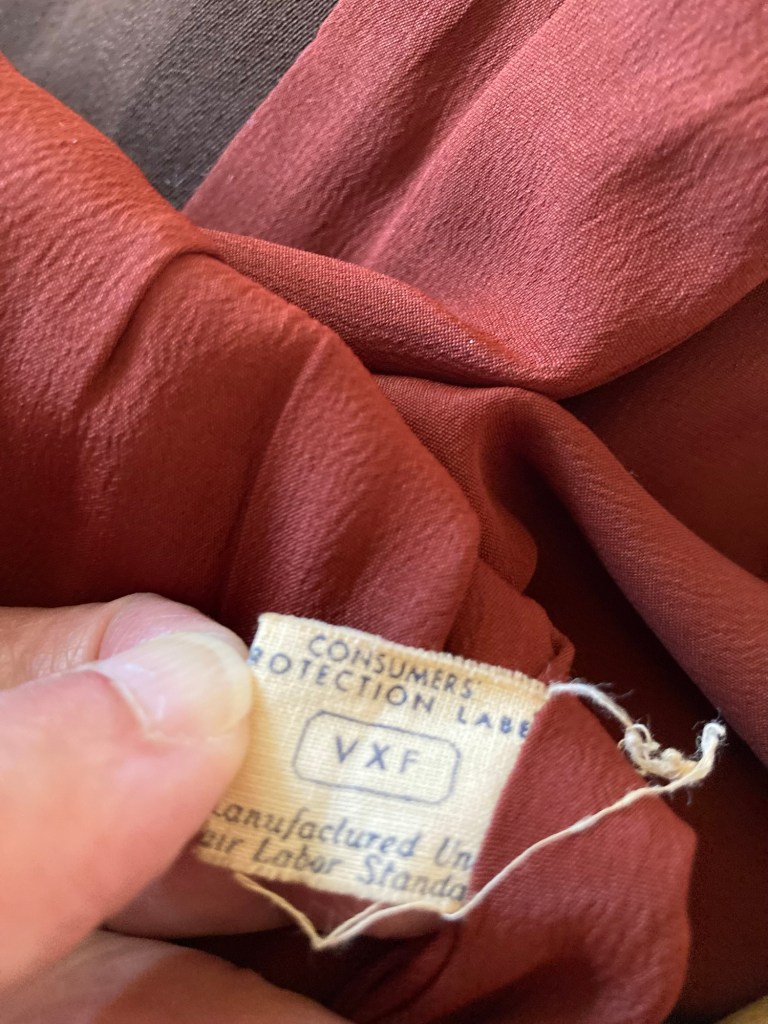
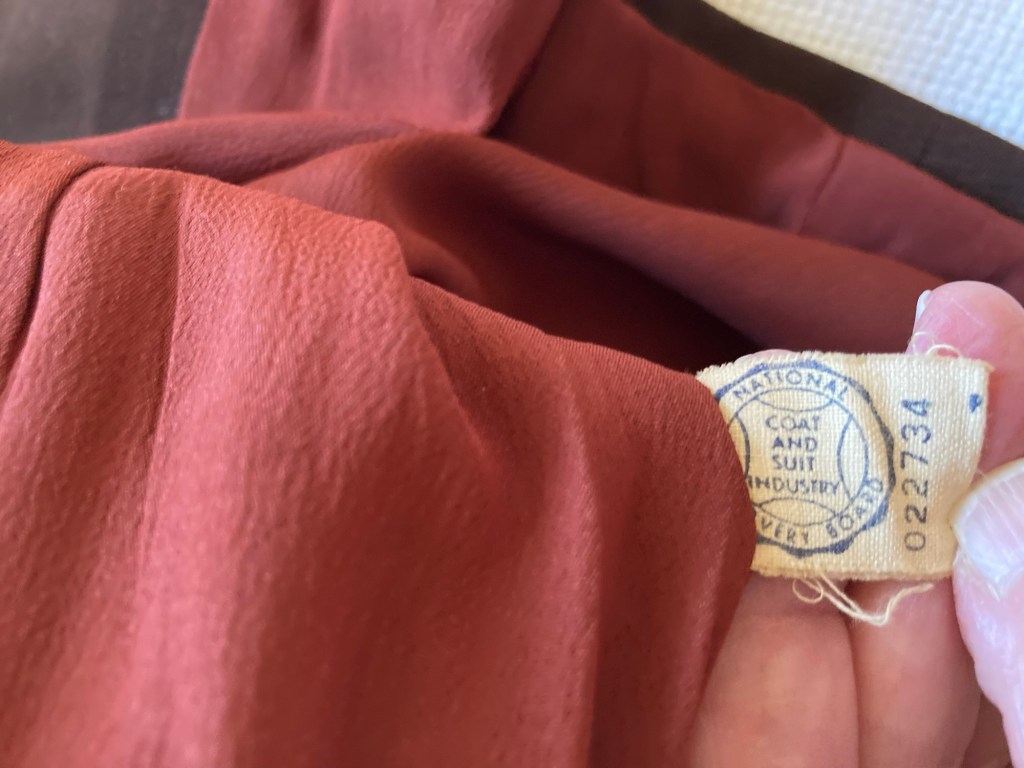
Any thoughts on the labels, dear readers? The hanger came with the suit and has a “Battlestein” stamp on it. My knowledge is limited about this but I do believe that this was a department store in Houston. The hanger also has store locations imprinted on it. The jacket label has a hand sewn label — “Nathan’s, Houston”.
So much to examine, research and be delighted by! Meanwhile, I continue with my own wardrobe replenishment of the aforementioned “sand and sea” knit capsule — I’m working on an oatmeal knit tank dress maxi and a pair of pants. I’m slow but plodding along.
Hope you enjoyed this piece of the past. See you next time….
Samina


That was lovely to see Samina, thank you for sharing! I hope someone has some info to share with you regarding the labels and provenance, I agree it would be so interesting to learn!
LikeLiked by 1 person