
Image of these low slung pants above is from the WordPress Image Library. 🙂
Best Sewing Practice and Sewing Tip: Is there a difference? In my opinion, there is some daylight between the two terms, although both are meant for the best possible outcome.
Best Practices are actions that apply to every project on your sewing table. They are habits, whether you’re sewing a dress, or pants, or curtains.
Sewing Tips are more specific to the task and project at hand; their purpose is to make your task easier, quicker, better quality, durable, etc. etc. and are meant to elevate the sewn item or your sewing experience. Or, both.
Back in October, I posted a week’s worth of Best Practices; shall we now do Sewing Tips?
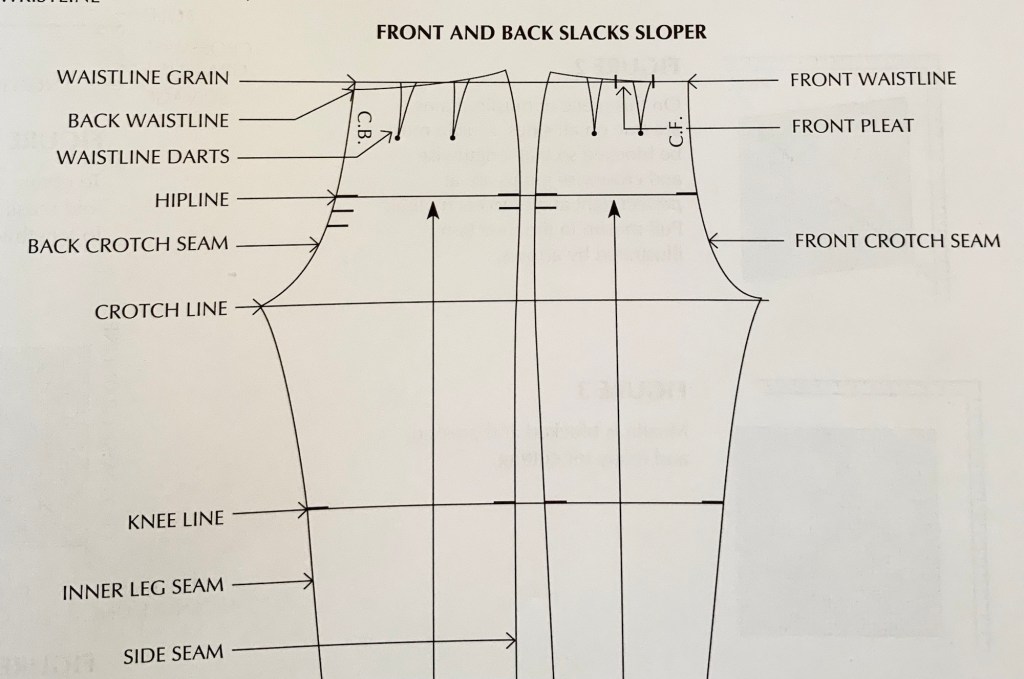
Let’s do pants. If you’re new to sewing pants, and the last pair you tried was giving you a weird wedgie, here’s something to know: look at pattern at the crotch point where it is extending out on front and back pieces. The back crotch point should extend out considerably more than the front; this accommodates your backside.
Here’s a tool I have for determining the measurement of your crotch seam. It’s a flexible ruler, marked in inches.
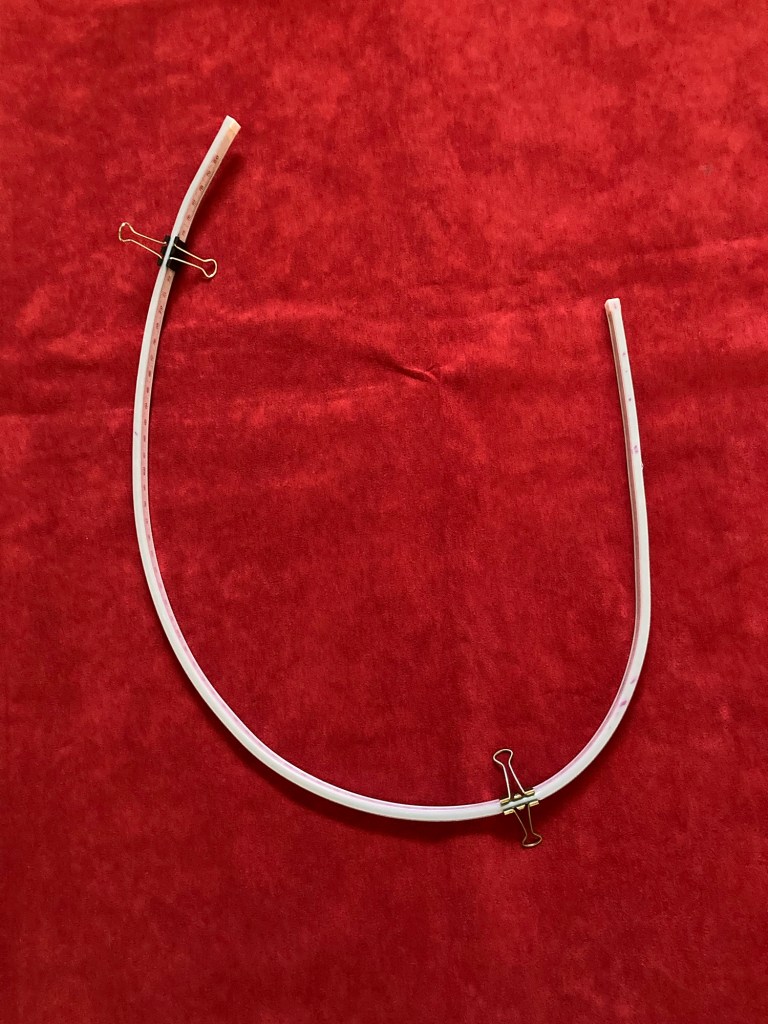
I am so sorry, but I don’t remember where it was purchased. As you can see, I put a small binder clip at the center (crotch point), then measured the (smaller) front, and (larger) back. Now I know what to do with a new pants pattern. When using this ruler, I held it at the front waist level (mine is at the navel), took the ruler between the legs over to the back waist (small of back) and marked that, also with a binder clip. (Notice that my front waist point dips compared to the back. Hee hee.) The center binder clip was placed where I considered my most comfy crotch point to be. Of course, ease will be added to this measurement. You can do all this with a regular tape measure, and of course you’ll do this while in your undies.
Another tip for measuring the crotch lengths: pull out a pair of pants that fit you well, turn them inside out with one leg inside the other, and measure each — ease would be included if you do it this way. I’ve used my knit pants in this photo, but may I suggest you use a woven pair?
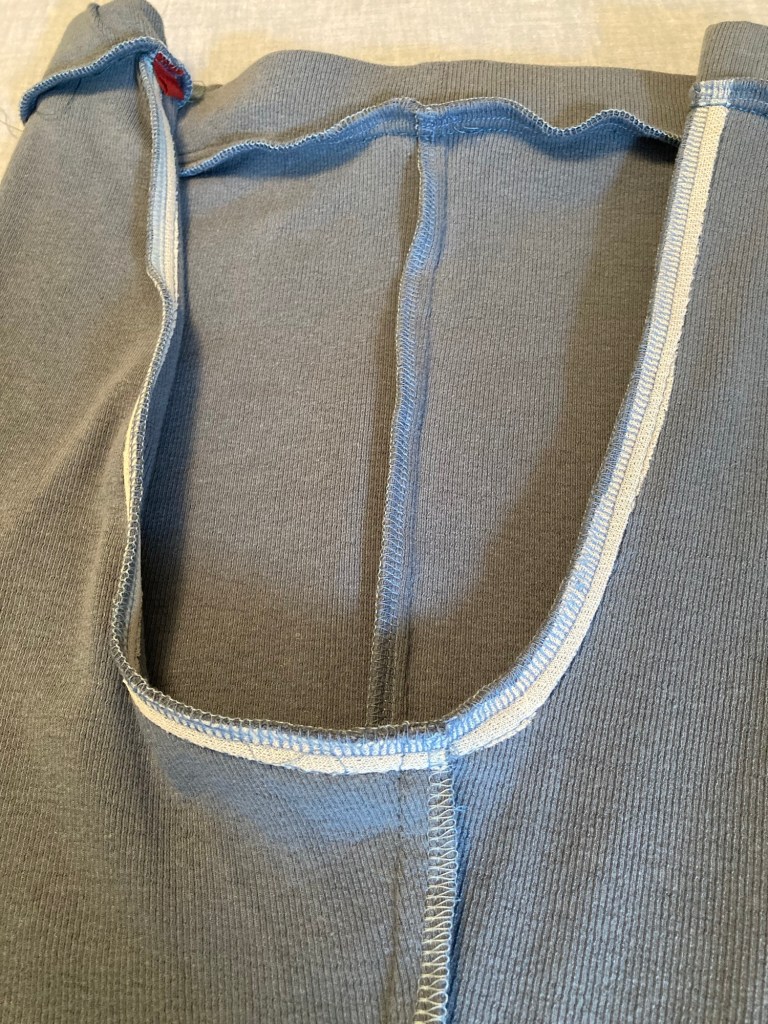
Pants fitting is an exercise which will test some of you. But start from measuring the crotch front and back length and you have a good start. How will you add to the crotch extension on the pattern if needed?
I am going to rely on a sewing expert Jennifer Stern who is a master in her field, and sharing a link to one of her many YouTube videos — pant fitting being an ongoing topic for all the nerdy, detail-obsessive people like me. Jennifer takes pant fitting to a granular level, and I am so there for it.
Do follow Jennifer’s YouTube channel, and I will see you again on this blog.
Samina
 Sew Everything Blog
Good tip, Samina!
I have found that on sewing patterns (but not RTW), the back crotch is frequently too short on me. Oddly, I have a very flat (Asian) bottom, and it seemed to me that women with a rounder bottom would have to add to the back crotch, not someone with my figure!
LikeLike