While viewing the collections for Fall 2025 Couture season, some pieces in Rahul Mishra’s collection have been living in my brain since. These are fashion elements that rise up in the air, defiant of gravity and extraordinarily dramatic and beautiful.
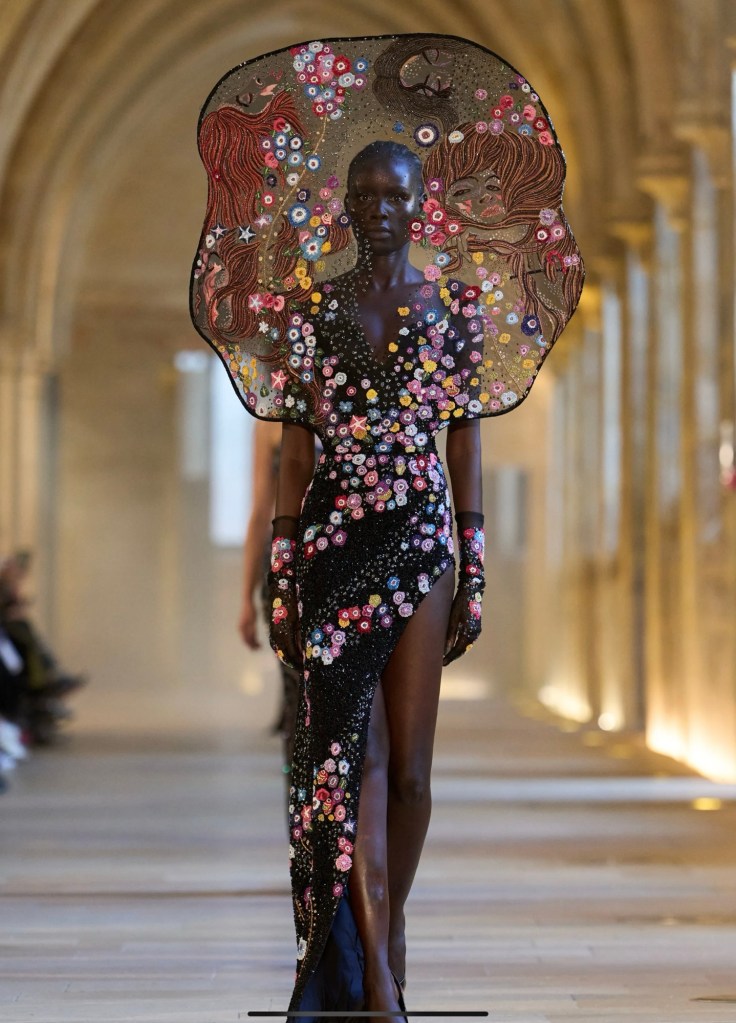
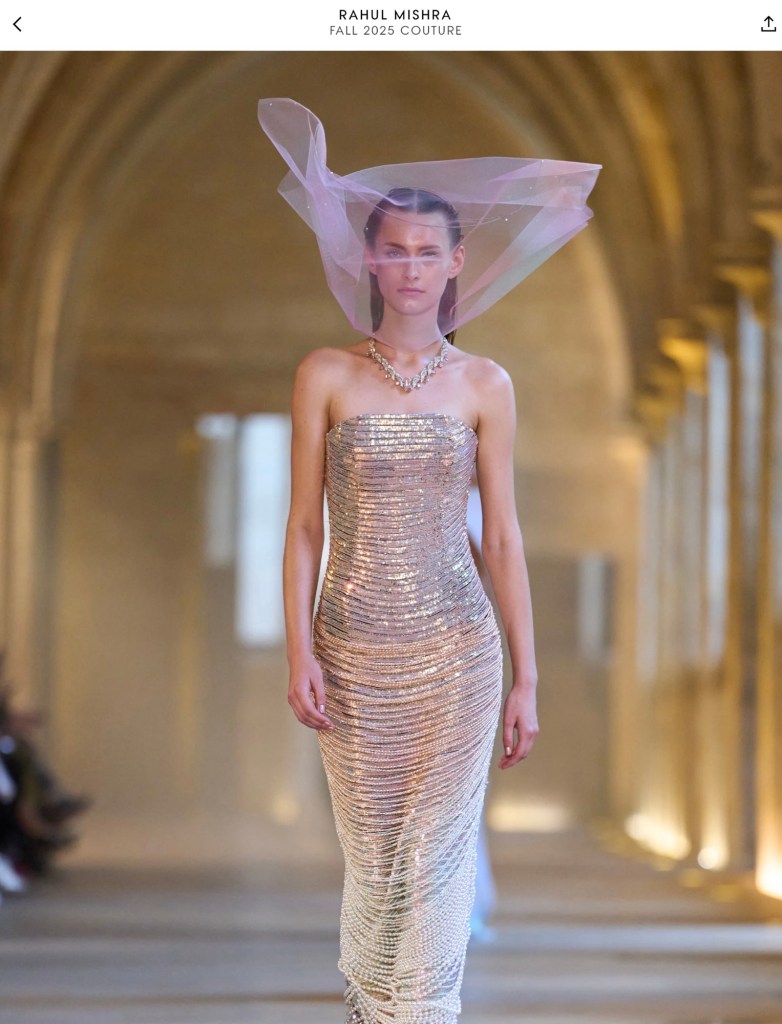
As I dug more into the collections, there were other designers with the same anti-gravity aesthetic. As always, Iris Van Herpen managed to push conventional boundaries with the airborne look as in her past collections.
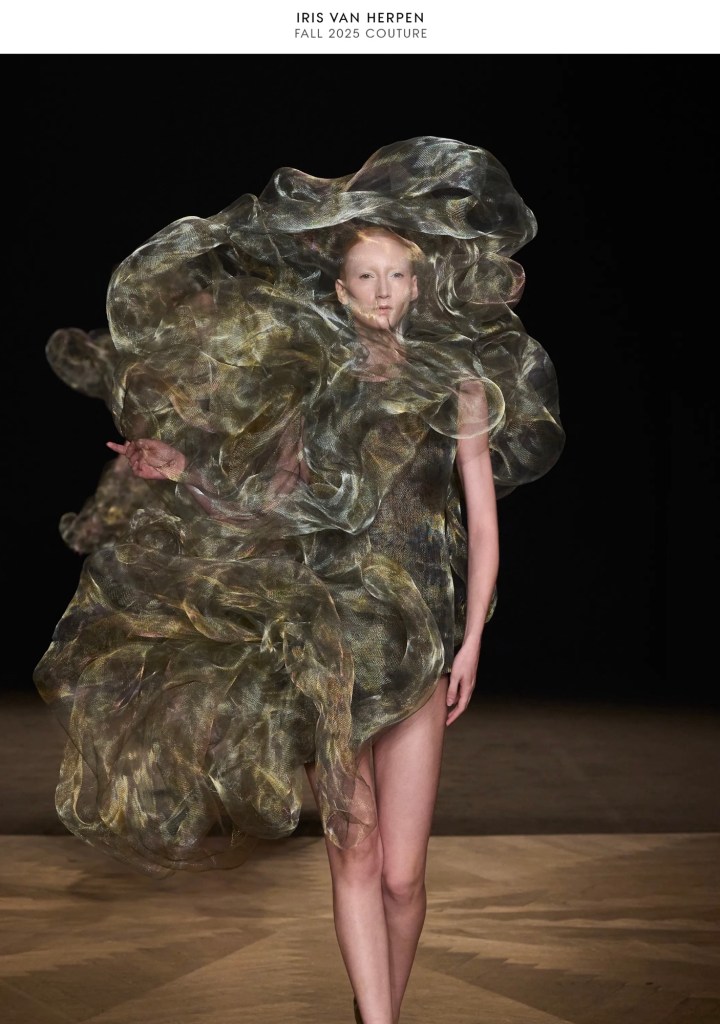

There may be more which I have not viewed. Do go to the Vogue Runway website and search for Mr. Mishra’s and other collections. Just for the wonderment…..
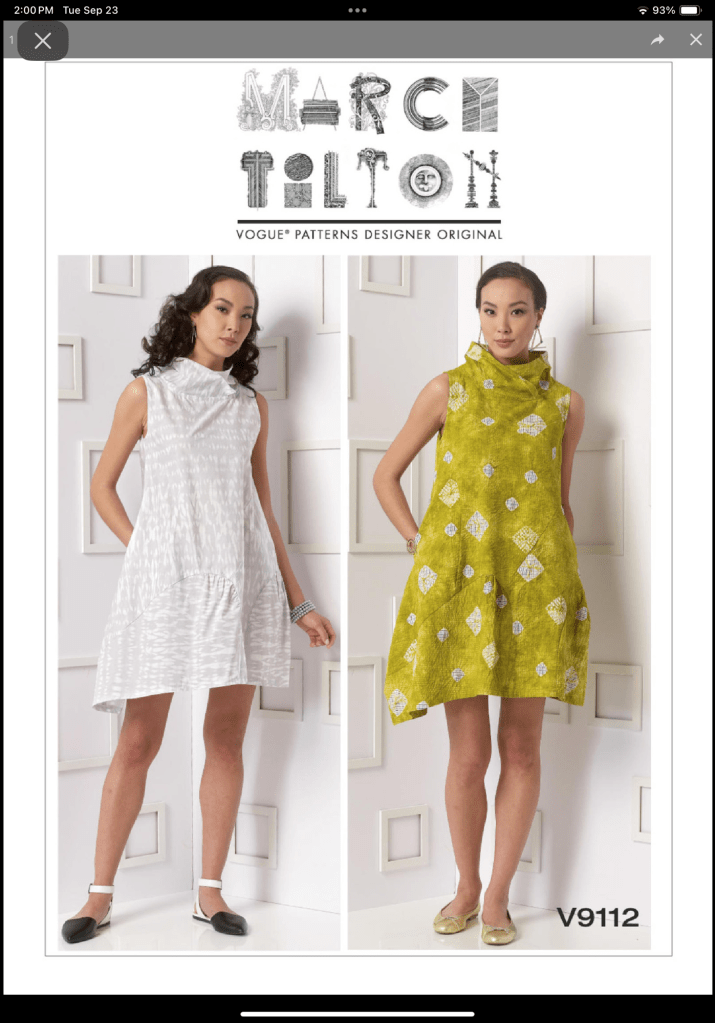
These avant garde looks are hard to translate to regular-people-wear. Are they, though? How can they be scaled down and be incorporated into something I’d be happy to wear in public, looking as if this is how I dress everyday? I understand that there are garments that are somewhat standing away from the body and are fun and chic for us plebeians, but I am focusing here on the totally upright elements in fashion. On a limited basis, the collar in Vogue 9112 has possibilities…. I made this pattern 10 years ago and now the collar has pretty much collapsed. Time to think a bout it again with more collar elevation support in play.
Shall we go back to the 16th century in the western hemisphere? England’s Queen Elizabeth I’s high lacy collar comes to mind. Her Majesty may have loved her gossamer lace upright ruff/collar, but did the artist take liberties in painting it so airy and thin?

We’ll never know for sure how Her Majesty’s gossamer, neck piece was kept upright. My limited research tells me that starch plus whalebone strips might be at play — or do I see a metal aperture upon which the lace was laid? What is it called anyway? Not a “ruff”, surely.
Three hundred years later……
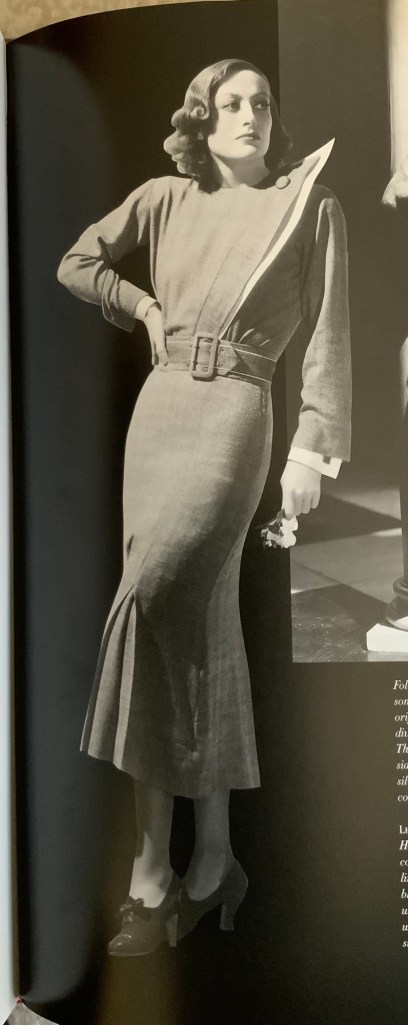
…. and we have a somewhat wearable upright feature in this modern (still, 90 plus years old) Hollywood design by Adrian who took the collar skyward — skeptics called it the “ironing board dress”; but our gal Joan Crawford pulled it off. To my knowledge, the elevation was gained with heavily starched linen, the look being inspired by the avante garde aesthetic of Elsa Schiaparelli in 1930s Paris. Mmmm, okay. The outfit was designed for a 1933 film Today We Live, which was a bit of a flop. There’s got to be a film clip somewhere.
Support system: There are tons of underpinnings that defy the gravitational pull. Some upright looks can be achieved by inner fabric support like stiff buckram, boning strips; and do not rule out very heavy starch. Sometimes the fashion fabric itself contributes with multiple layers of itself — does anyone know how ballet tutus are made? The ones real ballerinas wear where the tutu sticks out parallel to the floor? The wire and plastic tube apertures surely are the heroes of collars for Queen Elizabeth I and Rahul Mishra’s creations. Iris Van Herpen, I am told, has used 3-D printers to create some of her past collections — brava!!
Well, that was fun; what is a random fashion blog post, if you can’t have fun with it?
Until next time,
Samina
 Sew Everything Blog